
Is Phototherapy Treatment Safe for Your Skin?
When a skin condition continues despite regular creams or medications, your dermatologist may recommend phototherapy treatment. But one question naturally comes to mind: Is phototherapy treatment safe for your skin?
Phototherapy is a medically supervised treatment that uses specific wavelengths of light to manage certain skin conditions. Depending on the condition, treatment may help reduce inflammation, itching, abnormal skin-cell activity, or pigmentation changes.
While phototherapy can be an effective option for many patients, its safety depends on factors such as the type of light used, treatment dosage, skin condition, frequency of sessions, and professional supervision.
If you are considering Phototherapy treatment in Gurgaon Sector 49, understanding how the treatment works, its benefits, possible side effects, and safety precautions can help you make an informed decision.
At Arv Aesthetics, treatment planning should be based on the individual patient’s skin condition, medical history, skin type, and response to therapy rather than using the same approach for everyone.
What Is Phototherapy Treatment?
Phototherapy is a dermatological treatment in which controlled ultraviolet (UV) or other specific wavelengths of light are applied to the skin for therapeutic purposes.
Unlike ordinary exposure to sunlight, medical phototherapy uses a controlled amount of light for a specific duration and treatment schedule. The goal is to deliver the appropriate wavelength and dose while minimizing unnecessary exposure.
Depending on the patient’s condition, a dermatologist may consider different forms of phototherapy, including:
- Narrowband UVB
- Broadband UVB
- PUVA therapy
- Targeted phototherapy
The choice depends on the diagnosis, affected body area, severity of the condition, previous treatments, and the patient’s overall circumstances.
Is Phototherapy Treatment Safe?
Phototherapy can be safe for many patients when it is appropriately prescribed and medically supervised. However, it is not completely free from risks.
UV-based phototherapy deliberately exposes the skin to controlled ultraviolet radiation. Because of this, treatment needs to be carefully dosed and monitored.
A dermatologist may adjust the treatment according to factors such as:
- Skin type and sensitivity
- The specific skin condition
- Previous response to treatment
- The type of phototherapy being used
- Treatment area
- Current medications
- History of photosensitivity
- Development of redness or irritation during treatment
This individualized approach is important because excessive exposure can increase the risk of unwanted skin reactions.
What Skin Conditions Can Phototherapy Help Treat?
Phototherapy may be recommended for selected inflammatory, pigmentary, and other skin disorders.
Depending on the type of phototherapy, dermatologists may use it as part of treatment plans for conditions such as:
Psoriasis
Phototherapy can help slow excessive skin-cell growth and reduce inflammation associated with psoriasis.
Vitiligo
Certain forms of phototherapy, particularly narrowband UVB, may be used to encourage repigmentation in appropriate patients.
Eczema and Dermatitis
In selected cases, phototherapy may help reduce inflammation and itching associated with chronic eczema or dermatitis.
Other Skin Conditions
A dermatologist may consider phototherapy for other conditions depending on the diagnosis and individual treatment requirements.
It is important not to assume that phototherapy is appropriate for every skin problem. A proper diagnosis should come before treatment.
What Are the Common Side Effects of Phototherapy?
Most side effects associated with medically supervised phototherapy are related to the skin’s response to light.
Some patients may experience:
- Mild redness
- Dryness
- Itching
- Temporary skin irritation
- Increased sensitivity
- Mild tanning or changes in pigmentation
The intensity and duration of these effects can vary from person to person.
If you experience significant burning, persistent redness, blistering, severe discomfort, or another unusual reaction, inform your dermatologist promptly.
Can Phototherapy Damage Your Skin?
This is one of the most common concerns patients have.
Phototherapy uses controlled light exposure, but ultraviolet radiation can affect the skin. Therefore, dose control and professional supervision are important parts of safe treatment.
The risk of unwanted effects may increase if treatment is not appropriately prescribed, if excessive UV exposure occurs, or if a person has a condition or takes medication that increases photosensitivity.
This is why medical phototherapy should not be treated as simply exposing the skin to sunlight.
A dermatologist can determine an appropriate treatment protocol and modify it when the skin’s response indicates that changes are needed.
How Does a Dermatologist Make Phototherapy Safer?
Before starting treatment, a dermatologist may evaluate your skin condition, medical history, medications, previous treatments, and relevant risk factors.
During the treatment course, your response may also be monitored.
Important safety measures can include:
1. Correct Diagnosis
Phototherapy should be used for an appropriate medical indication. Treating an undiagnosed skin problem without professional evaluation may delay the correct treatment.
2. Appropriate Light Selection
Different wavelengths have different therapeutic applications. The dermatologist determines which type of phototherapy is appropriate for the condition.
3. Controlled Dosage
The amount of light exposure is carefully controlled. Treatment may be adjusted based on how your skin responds.
4. Eye Protection
Depending on the type of phototherapy, appropriate eye protection may be required to reduce unnecessary exposure.
5. Medication Review
Some medications can increase sensitivity to light. Your dermatologist should know about medicines, supplements, and topical products you are using.
6. Regular Monitoring
Your skin should be monitored throughout the treatment course. Any significant reaction should be communicated to the treating professional.
Is Phototherapy Suitable for Everyone?
No. Phototherapy is not automatically suitable for every patient.
Your dermatologist may need to consider factors such as:
- Existing medical conditions
- History of abnormal reactions to sunlight
- Photosensitivity disorders
- Medications that increase photosensitivity
- Previous skin cancer or relevant skin history
- Pregnancy or other individual circumstances
- The specific diagnosis being treated
This is why an individual consultation is important before beginning treatment.
What Should You Tell Your Dermatologist Before Phototherapy?
During your consultation, provide complete information about your medical and skin history.
Tell your dermatologist if you:
- Take prescription or over-the-counter medicines
- Use photosensitizing medications
- Have experienced unusual reactions to sunlight
- Have had skin cancer or suspicious skin lesions
- Have a history of significant sun exposure
- Are pregnant or planning pregnancy
- Are using other treatments for your skin condition
Being transparent about your medical history helps your dermatologist assess whether phototherapy is appropriate and how treatment should be planned.
What Happens During a Phototherapy Session?
The exact process depends on the type of phototherapy being used.
Generally, the affected skin is exposed to a controlled amount of therapeutic light for a predetermined period.
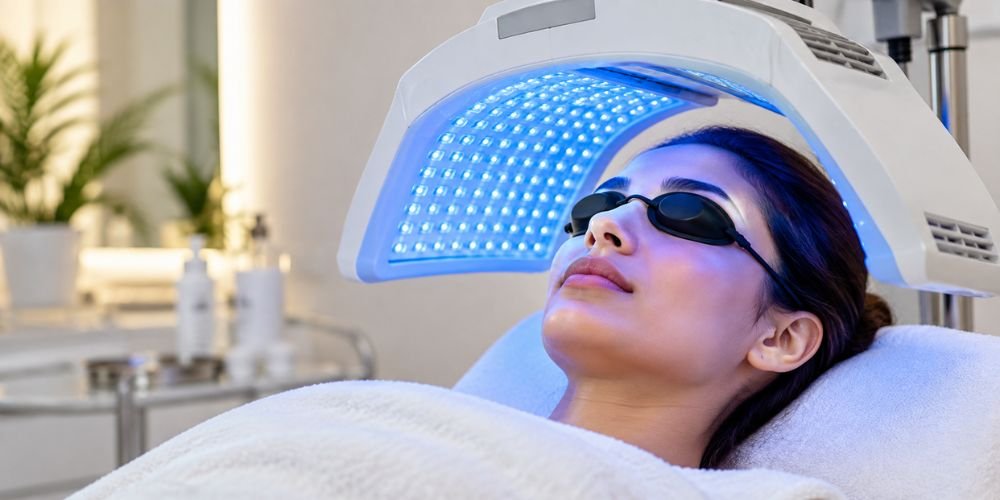
Depending on the treatment area, you may stand inside a phototherapy unit or receive targeted treatment to a specific area.
The treatment itself is usually brief, but the total course can involve multiple sessions.
Your dermatologist determines the frequency and duration based on your diagnosis and response.
How Many Phototherapy Sessions Are Needed?
There is no single number of sessions that works for everyone.
The required treatment course may depend on:
- The condition being treated
- Severity of symptoms
- Treatment response
- Type of phototherapy
- Area of the body involved
- Individual skin sensitivity
Some patients may need treatment several times per week over a period determined by their dermatologist.
The important point is that phototherapy should be viewed as a planned treatment course rather than a one-time cosmetic procedure.
How Can You Protect Your Skin During Phototherapy?
Following your dermatologist’s instructions is an important part of treatment safety.
You may be advised to:
- Follow the prescribed treatment schedule
- Avoid additional unnecessary UV exposure
- Protect areas that do not require treatment
- Use recommended skincare products
- Avoid changing treatment frequency on your own
- Report unusual reactions promptly
- Attend follow-up appointments as advised
Do not increase the duration or frequency of phototherapy yourself in an attempt to achieve faster results.
More exposure does not necessarily mean better results and can increase the likelihood of unwanted skin reactions.
Can You Have Phototherapy at Home?
Home phototherapy devices are available for certain conditions and selected patients. However, using a light-based device without appropriate medical guidance can be risky.
The correct device, wavelength, dosage, treatment frequency, and monitoring requirements depend on the condition.
If home phototherapy is being considered, discuss it with a qualified dermatologist first.
Phototherapy Treatment vs. Sunlight Exposure
Medical phototherapy should not be confused with deliberately spending time in the sun to treat a skin condition.
Natural sunlight contains different wavelengths and its intensity changes depending on the time, season, location, weather, and other factors. Medical phototherapy is designed to provide controlled exposure under a specific treatment protocol.
Therefore, replacing prescribed phototherapy with uncontrolled sun exposure is not an equivalent approach.
What Results Can You Expect From Phototherapy?
Results vary considerably depending on the condition being treated.
Some patients may notice gradual improvement in symptoms such as inflammation, scaling, itching, or pigmentation changes. Others may require a longer treatment course.
The response can also depend on whether phototherapy is being used alone or alongside other treatments.
A dermatologist can provide a more realistic expectation after evaluating your skin condition.
When Should You Contact Your Dermatologist?
Contact your treating professional if you develop symptoms that appear more severe than expected, particularly:
- Significant or painful redness
- Blistering
- Severe burning
- Persistent swelling
- Unusual skin changes
- Severe itching or discomfort
- Any reaction that concerns you
Do not continue increasing treatment exposure on your own if you develop an unexpected reaction.
Why Professional Evaluation Matters
Phototherapy is a medical treatment, so the most important question is not simply whether light therapy is safe. The more useful question is whether the right type of phototherapy, at the right dose, for the right condition, is appropriate for you.
A qualified dermatologist can assess your condition, discuss potential benefits and risks, and determine whether phototherapy should be part of your treatment plan.
If you are searching for Phototherapy treatment in Gurgaon, choosing a clinic where your condition is properly evaluated and treatment is monitored can help support a safer and more informed treatment experience.
Frequently Asked Questions About Phototherapy Treatment
Is phototherapy treatment safe?
Phototherapy can be safe and useful for appropriately selected patients when prescribed and monitored by a qualified healthcare professional. However, it can cause side effects, particularly when UV exposure is excessive.
Does phototherapy hurt?
Phototherapy is generally not described as painful, although some patients may experience warmth, redness, dryness, itching, or irritation depending on the treatment and individual sensitivity.
Can phototherapy cause skin cancer?
UV radiation can contribute to skin cancer risk, and the long-term risks depend on factors such as the type of phototherapy, cumulative exposure, and treatment history. Your dermatologist can discuss the risks relevant to your treatment plan.
How long does phototherapy take to work?
The timeline varies by condition, treatment type, and individual response. Phototherapy commonly requires a series of sessions rather than producing an immediate result.
Can phototherapy permanently cure a skin condition?
Not necessarily. Some skin conditions are chronic and may require ongoing management. Phototherapy can help control symptoms or improve the appearance of certain conditions, but whether its effects are lasting depends on the underlying condition.
Should I use sunscreen during phototherapy?
Sunscreen and other forms of UV protection may be recommended for areas that are not intended to receive treatment. However, instructions can vary depending on the phototherapy protocol, so follow your dermatologist’s specific advice.
Can I stop phototherapy once my skin improves?
Do not change or stop a prescribed treatment plan without discussing it with your dermatologist. Your doctor can advise whether treatment should be continued, reduced, or stopped based on your response.
Final Thoughts
Phototherapy treatment can be a valuable option for selected skin conditions when it is appropriately prescribed, carefully dosed, and professionally monitored. Like any medical treatment, it has potential benefits and risks.
Understanding your diagnosis, the type of phototherapy being recommended, possible side effects, and the precautions involved can help you approach treatment with realistic expectations.
If you are considering Phototherapy treatment in Gurgaon Sector 49, consult a qualified dermatologist for an individualized assessment rather than choosing treatment based solely on general information available online.
At Arv Aesthetics, a personalized approach can help determine whether phototherapy is appropriate for your particular skin concern and how it can fit into a broader treatment plan.