

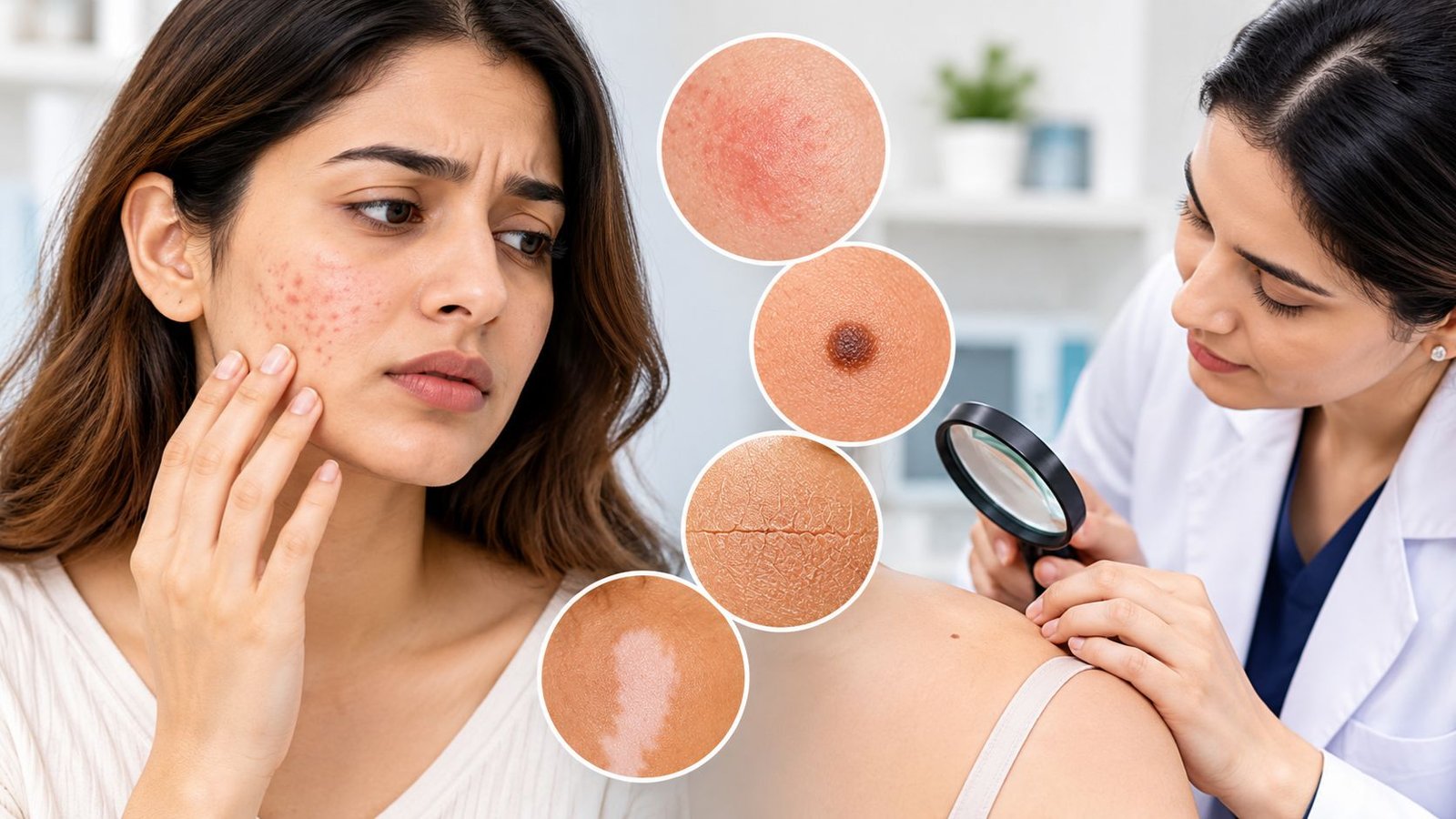
Skin Problems You Should Never Ignore: When to See a Specialist
Your skin does more than define your appearance. It protects your body, helps regulate temperature, and can sometimes reveal changes in your overall health. While occasional pimples, dryness, or mild irritation are common, certain skin problems should not be ignored, especially when they persist, spread, change in appearance, or cause significant discomfort.
Many people try home remedies or over-the-counter creams before seeking professional advice. Although some minor skin concerns improve with simple care, others may require proper examination and timely treatment. Recognising the warning signs can help you avoid unnecessary discomfort and prevent some conditions from becoming more difficult to manage.
If you are experiencing persistent acne, unusual rashes, unexplained itching, changing moles, or recurring skin infections, consulting a qualified skin specialist can help you understand the possible cause and appropriate next steps.
At ARV Aesthetics Clinic, the goal is to help people make informed decisions about their skin health through appropriate assessment, personalised care, and guidance suited to their concerns.
Why Should You Pay Attention to Skin Changes?
Skin conditions can develop for several reasons, including allergies, infections, hormonal changes, environmental exposure, medication reactions, and inflammatory disorders. Some concerns are temporary, while others need professional evaluation.
The important thing is to notice changes in your skin rather than focusing only on how they look.
For example, a pimple that heals within a few days may not be concerning. However, painful acne that repeatedly appears, leaves scars, or does not improve with appropriate care may need medical attention. Similarly, an itchy patch could result from dry skin, but persistent itching without an obvious explanation deserves closer assessment.
Early consultation can help identify the underlying problem, reduce discomfort, and support more appropriate treatment decisions.
10 Skin Problems You Should Never Ignore
1. Persistent or Severe Acne
Acne is common among teenagers and adults. It can occur because of hormonal fluctuations, excess oil production, blocked pores, inflammation, and other contributing factors.
Occasional breakouts are generally manageable, but persistent or severe acne should not be overlooked.
When to see a specialist:
- Deep, painful pimples or cyst-like lesions.
- Acne that repeatedly returns despite appropriate skincare.
- Scars or dark marks developing after breakouts.
- Acne that affects your confidence or emotional well-being.
- Sudden, significant acne changes in adulthood.
Picking, squeezing, or aggressively scrubbing pimples may increase irritation and the risk of scarring. A skin specialist can assess the type and severity of acne and recommend suitable treatment, which may include prescription creams, oral medication, or other procedures when appropriate.
2. Persistent Itching, Redness, or Skin Irritation
Itching and redness can result from dry skin, eczema, contact dermatitis, allergies, insect bites, or infections. Sometimes, a new cosmetic product, fragrance, detergent, or skincare ingredient triggers the reaction.
Although mild irritation may settle after removing the suspected trigger, ongoing symptoms should be evaluated.
Warning signs include:
- Itching that continues for days or repeatedly returns.
- Red, inflamed, cracked, or scaly skin.
- Rashes that spread to other body areas.
- Itching that interferes with sleep.
- Skin irritation accompanied by pain, swelling, or discharge.
Avoid repeatedly applying different creams without understanding the cause. Some products may worsen certain conditions or mask symptoms. A qualified professional can help distinguish between possible causes and recommend appropriate care.
3. Moles or Pigmented Spots That Change
Most moles are harmless, but a new or changing spot deserves attention. Certain changes in a mole can be warning signs of skin cancer, including melanoma.
Remember the ABCDE rule when checking a suspicious mole:
- A for Asymmetry: One half looks different from the other.
- B for Border: The edges are irregular, uneven, or poorly defined.
- C for Colour: The spot has several colours or an uneven colour pattern.
- D for Diameter: The spot is larger than approximately 6 mm, although melanomas can be smaller.
- E for Evolving: The mole changes in size, shape, colour, or sensation.
A spot that bleeds, develops a persistent crust, or becomes an unusual sore should also be examined.
Do not wait for every warning sign to appear before seeking advice. Arrange a prompt medical assessment if you notice a suspicious change. A clinician can determine whether further examination or a biopsy is necessary.
4. Skin Rashes That Do Not Improve
Rashes can appear as red patches, bumps, blisters, scaly areas, or changes in skin colour. They may be associated with allergies, eczema, fungal infections, medication reactions, or other conditions.
A rash that persists, repeatedly returns, spreads, or fails to improve with appropriate care needs evaluation.
Consult a specialist if:
- The rash continues to worsen.
- It affects the face, eyelids, or sensitive areas.
- It causes significant itching, burning, or pain.
- You notice cracks, oozing, or signs of infection.
- The rash begins after starting a new medication.
Seek urgent medical care if a rash occurs with fever and severe illness, rapidly spreading redness, extensive blistering, or skin peeling. A rash accompanied by swelling of the lips or tongue, or difficulty breathing, requires emergency care.
The right treatment depends on the cause. Using a cream intended for one condition may not help another, so an accurate assessment is important.
5. Unusual Dryness, Scaling, or Cracked Skin
Dry skin is common, especially during colder weather, after frequent washing, or when using harsh cleansers. However, persistent dryness can sometimes be associated with eczema, psoriasis, contact dermatitis, or other health concerns.
Watch for:
- Thick, scaly patches.
- Repeated cracking or bleeding.
- Painful skin around the hands, feet, or joints.
- Dryness that continues despite regular moisturising.
- Patches that become increasingly inflamed.
Using a gentle cleanser, avoiding very hot showers, and applying a fragrance-free moisturiser may help mild dryness. If symptoms persist or the skin becomes painful or inflamed, seek professional advice rather than relying solely on moisturisers.
6. Fungal Infections That Keep Coming Back
Fungal skin infections may cause itching, scaling, redness, or ring-shaped patches. They can affect areas such as the feet, groin, body, and skin folds.
These infections can resemble other skin conditions, making self-diagnosis difficult. Inappropriate treatment may delay recovery.
Signs that need attention include:
- Ring-shaped or spreading scaly patches.
- Persistent itching in warm, moist areas.
- Peeling or cracking between the toes.
- Recurrent rashes in skin folds.
- Symptoms that do not improve or worsen with treatment.
Keep affected areas clean and dry, avoid sharing personal items such as towels, and do not use steroid-containing combination creams without medical advice. Steroids can make some fungal infections harder to recognise and treat.
A skin specialist can assess the affected area and recommend an appropriate antifungal treatment when needed.
7. Sudden Skin Discolouration or Dark Patches
Dark spots and uneven skin tone can develop because of sun exposure, acne, hormonal changes, inflammation, or certain medications. Some people also develop darker, thicker skin around the neck, underarms, or other body folds.
Although many pigmentation concerns are harmless, sudden or unexplained changes should not automatically be treated as a cosmetic issue.
Consult a professional if:
- Dark patches appear suddenly or spread quickly.
- Pigmentation develops without an obvious trigger.
- The skin becomes thick or velvety, especially around the neck or underarms.
- A pigmented spot changes in shape or colour.
- Discolouration occurs alongside other new symptoms.
Thickened, velvety skin in body folds can sometimes be associated with insulin resistance or other metabolic conditions. A clinician can determine whether further assessment is appropriate.
Avoid unverified skin-lightening products or harsh bleaching treatments. The safest approach is to identify the cause before starting treatment.
8. Hair Loss Accompanied by Scalp Changes
Hair shedding can occur because of stress, nutritional deficiencies, hormonal changes, illness, medications, or hereditary factors. However, hair loss accompanied by scalp symptoms may require more specific evaluation.
Pay attention to:
- Sudden or patchy hair loss.
- Scalp redness, scaling, or persistent itching.
- Pain, tenderness, or swelling.
- Broken hairs or areas that appear inflamed.
- Progressive hair loss with smooth or shiny patches of scalp.
Some scalp conditions can cause permanent hair loss if inflammation damages the hair follicles. Early assessment is particularly important when hair loss occurs with pain, redness, or scarring.
A specialist can examine the scalp, review relevant health factors, and recommend further tests or treatment when indicated.
9. Skin Sores That Do Not Heal
Small cuts and minor wounds usually begin healing within a reasonable period. A sore that repeatedly opens, continues to bleed, forms a persistent crust, or does not heal should be assessed.
Possible causes include infection, poor wound healing, circulation problems, and, in some cases, skin cancer.
Seek medical advice if a lesion:
- Remains open or repeatedly returns.
- Bleeds without a clear reason.
- Develops increasing pain, swelling, warmth, or discharge.
- Forms a persistent crust or ulcer.
- Changes noticeably in size or appearance.
Do not assume that a non-healing sore is simply a stubborn pimple or an age-related skin change. A clinician can determine whether further examination or testing is required.
10. Sudden Swelling, Blisters, or Severe Skin Reactions
Some skin reactions develop rapidly and require urgent attention. New blisters, widespread inflammation, or sudden swelling may be associated with allergic reactions, infections, medication reactions, or other serious conditions.
Get prompt medical attention for:
- Extensive or painful blistering.
- Rapidly spreading redness with fever.
- Significant facial swelling.
- Skin peeling after starting a medication.
- Painful sores involving the eyes, mouth, or other mucous membranes.
Call emergency services immediately if you experience difficulty breathing, swelling of the tongue or throat, fainting, or other signs of a severe allergic reaction. Do not wait for a routine clinic appointment.
When Should You Visit a Skin Specialist?
It is not always easy to decide whether a skin concern requires professional care. A useful rule is to pay attention to its duration, severity, progression, and effect on your daily life.
Consider booking an appointment if your skin problem:
- Persists or repeatedly returns.
- Spreads or changes in appearance.
- Causes ongoing pain, itching, or discomfort.
- Leaves scars or persistent pigmentation.
- Does not improve with appropriate basic care.
- Appears after starting a new medication or skincare product.
- Affects your sleep, confidence, or quality of life.
Seek urgent care for rapidly worsening symptoms, severe pain, fever with a spreading rash, extensive blistering, or signs of a serious allergic reaction. Suspicious changing moles and non-healing sores should also be assessed promptly.
How Can a Skin Specialist Help?
A skin specialist, usually a dermatologist, is trained to assess conditions affecting the skin, hair, and nails. The first step is understanding your symptoms and identifying the likely cause.
Depending on your concern, the assessment may involve:
- Reviewing your medical history: Your clinician may ask when the problem started, whether it has changed, which products you use, and whether you have any relevant medical conditions or medication history.
- Examining your skin: The appearance, location, distribution, and progression of the symptoms can provide important clues.
- Recommending tests when needed: Some conditions can be diagnosed through examination alone. Others may require a skin scraping, blood test, allergy assessment, or biopsy, depending on the findings.
- Creating an appropriate treatment plan: Treatment may involve prescription creams, oral medication, moisturisers, sun protection, or selected dermatological procedures. The choice depends on the diagnosis and individual needs.
- Explaining prevention and follow-up: You may receive guidance on skincare habits, avoiding triggers, monitoring symptoms, and recognising signs that require another consultation.
Not every skin problem needs a procedure or extensive testing. Appropriate care begins with a proper assessment and a treatment plan based on the individual condition.
Common Skin Care Mistakes to Avoid
Everyday habits can sometimes worsen skin irritation or delay the correct treatment. Avoid these common mistakes:
- Using multiple products at once: Introducing several active ingredients together can cause irritation and make it difficult to identify the trigger.
- Picking pimples or scratching rashes: This can damage the skin and increase the risk of infection, scarring, or pigmentation.
- Using prescription creams without guidance: Steroid-containing creams and combination products may be unsuitable for certain infections or other conditions.
- Following unverified home remedies: Lemon juice, harsh scrubs, and other irritating substances can damage the skin barrier.
- Ignoring sun protection: Regular sun protection helps reduce sun damage and can support the management of some pigmentation concerns.
- Stopping treatment too early: Some conditions require a prescribed course of treatment. Follow your clinician’s instructions and ask before changing it.
- Delaying care for changing skin lesions: A mole that changes or a sore that does not heal should not be managed only with cosmetic products.
Simple Daily Habits for Healthier Skin
Good skincare does not have to be complicated. A consistent routine can support the skin barrier and help reduce avoidable irritation.
- Cleanse gently using a product suited to your skin.
- Apply a moisturiser regularly, especially after bathing.
- Use broad-spectrum sunscreen with SPF 30 or higher when appropriate, and reapply as directed.
- Avoid products that repeatedly cause burning, itching, or redness.
- Do not share towels, razors, or other personal items when an infection is suspected.
- Maintain a balanced diet, adequate hydration, and healthy sleep habits.
- Monitor new or changing moles, persistent rashes, and non-healing sores.
- Seek professional advice when symptoms persist or worsen.
Remember that healthy skin looks different for different people. The aim is not to achieve flawless skin, but to maintain skin health, comfort, and function.
Choosing a Skin Specialist in Gurgaon Sector 49
When looking for a Skin Specialist in Gurgaon Sector 49, choose a qualified professional who can evaluate your concern carefully and explain the available treatment options.
Consider these factors before booking an appointment:
Qualifications and training: Check whether the treating doctor has appropriate qualifications and training for the condition you want assessed.
Accurate diagnosis: A suitable consultation should focus on understanding the cause of your symptoms rather than recommending products or procedures without an assessment.
Clear treatment explanations: You should understand the expected benefits, possible side effects, costs where relevant, and any necessary follow-up.
Patient safety and hygiene: If a procedure is recommended, ask about its suitability, potential risks, and the clinic’s infection-control practices.
Individualised advice: Skin types, medical histories, and treatment responses vary. Your care should reflect your specific needs.
If you are searching for a Skin Specialist in Gurgaon, ARV Aesthetics Clinic may be an option to consider for discussing your skin concerns. Before booking, confirm the clinic’s available dermatology services, the treating professional’s qualifications, and whether the clinic is appropriate for your particular condition.
Frequently Asked Questions
1. Which skin problems require a specialist?
Persistent acne, recurring rashes, severe itching, suspected fungal infections, unexplained pigmentation, unusual hair loss, changing moles, and sores that do not heal may require professional assessment. Sudden severe reactions or breathing difficulties require urgent or emergency care.
2. When should I consult a Skin Specialist in Gurgaon Sector 49?
Consider consulting a specialist when a skin concern persists, worsens, repeatedly returns, causes significant discomfort, or does not respond to appropriate basic care. Seek prompt assessment for changing moles and non-healing sores.
3. Can I treat skin problems at home?
Mild dryness or occasional irritation may improve with gentle cleansing, moisturising, and avoiding known triggers. However, persistent, painful, spreading, or unexplained symptoms should be assessed rather than treated repeatedly with unverified remedies.
4. Are dark patches on the skin always a cosmetic problem?
No. Dark patches can result from sun exposure, acne, inflammation, hormonal changes, or other causes. Thickened, velvety patches around the neck or underarms may sometimes be associated with metabolic conditions and warrant medical evaluation.
5. Is every mole dangerous?
No. Most moles are harmless. However, a mole that changes in size, shape, colour, or sensation, or a spot that bleeds or does not heal, should be examined by a qualified clinician.
6. Can skincare products make a skin condition worse?
Yes. Fragrances, exfoliating acids, retinoids, bleaching agents, and other ingredients can irritate some skin types. If a product causes persistent burning, swelling, or a rash, stop using it and seek medical advice if symptoms continue or are severe.
7. How do I choose a Skin Specialist in Gurgaon?
Check the treating professional’s qualifications, experience with your concern, approach to diagnosis, explanation of risks and benefits, and follow-up arrangements. Confirm that the clinic offers the service you need.
Conclusion
Your skin can offer important clues about your health, and persistent changes deserve attention. While many skin concerns are minor, symptoms such as severe acne, recurring rashes, unusual pigmentation, changing moles, unexplained hair loss, and non-healing sores should not be ignored.
Avoid self-diagnosing every rash or relying on unverified products. A timely professional assessment can help identify the cause, guide appropriate treatment, and reduce the risk of complications.
If you are looking for a Skin Specialist in Gurgaon Sector 49 or exploring options for a Skin Specialist in Gurgaon, consider contacting ARV Aesthetics Clinic to confirm its services and the qualifications of the treating professional. Taking a proactive approach to skin health can help you make better-informed decisions and care for your skin with confidence.
Medically Reviewed By: Dr. Gurvinder Banga
- Qualifications: MBBS, DDVL
- Specialty: Dermatology and Cosmetology
- Medical Registration No.: HN 4209, Haryana State Medical Council (2009)
- Clinic: ARV Aesthetics Skin and Laser Clinic, Gurugram