
Common Skin Problems a Dermatologist Can Treat
Your skin is your body’s largest organ, and it can be affected by everything from weather changes and hormonal fluctuations to allergies, infections, and lifestyle factors. While occasional pimples or dryness may improve with basic care, persistent or recurring skin concerns often need professional evaluation.
A dermatologist is a medical specialist trained to diagnose and treat conditions affecting the skin, hair, and nails. Getting the right diagnosis early can help prevent a minor skin concern from becoming a long-term problem.
At ARV Aesthetics, patients can seek professional dermatological care for a wide range of common and complex skin concerns.
What Does a Dermatologist Treat?
Dermatologists manage many different skin conditions. Treatment depends on the cause, severity, skin type, age, medical history, and individual needs of the patient.
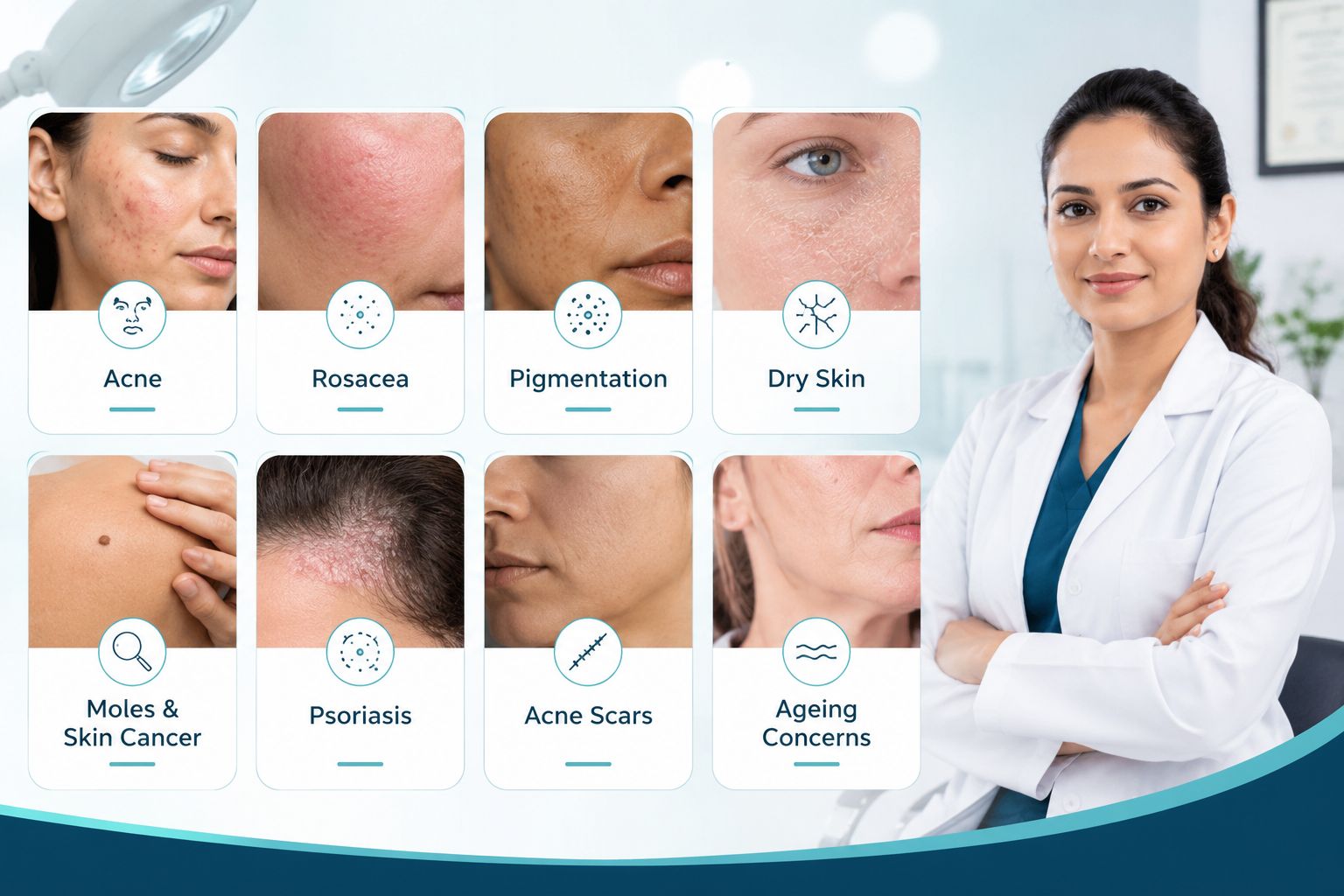
Some of the most common problems treated by dermatologists include:
1. Acne and Pimples
Acne is one of the most common skin concerns, particularly among teenagers and young adults, but it can affect people at any age. Hormonal changes, excess oil production, blocked pores, bacteria, and certain lifestyle factors may contribute to acne.
A dermatologist can identify the type and severity of acne and recommend an appropriate treatment plan. Depending on the condition, treatment may include topical medicines, oral medications, chemical peels, or other dermatological procedures.
Treating acne early can also help reduce the risk of persistent acne scars and pigmentation.
2. Acne Scars and Skin Pigmentation
Even after acne disappears, it can leave behind dark spots, uneven skin tone, or scars. Pigmentation can also develop due to sun exposure, hormonal changes, inflammation, or other skin conditions.
A dermatologist can assess whether the concern is pigmentation, post-acne marks, or scarring and recommend suitable treatment options. Depending on the individual’s skin condition, treatment may involve prescription products, chemical peels, laser-based procedures, or other professional treatments.
3. Eczema and Dry, Itchy Skin
Eczema can cause dry, itchy, irritated, and inflamed skin. It may appear on different parts of the body and can sometimes flare up repeatedly.
A dermatologist can help identify possible triggers and create a treatment and skincare routine to control symptoms. Proper moisturisation and avoiding known irritants are often important parts of managing eczema.
4. Psoriasis
Psoriasis is a chronic skin condition that can cause thick, scaly, and inflamed patches on the skin. It commonly affects areas such as the elbows, knees, scalp, and lower back, although it can occur elsewhere.
Because psoriasis can vary considerably from person to person, professional evaluation is important. A dermatologist can assess the condition and recommend treatment based on its severity and location.
5. Fungal Skin Infections
Fungal infections can cause itching, redness, scaling, or ring-shaped patches on the skin. They may affect areas such as the feet, groin, body, or scalp.
Self-treatment without knowing the actual cause can sometimes delay proper treatment. A dermatologist can examine the affected area and determine whether the problem is fungal or caused by another skin condition.
6. Skin Allergies and Rashes
Skin rashes can develop because of allergies, infections, medications, cosmetics, environmental exposure, or underlying skin conditions.
A dermatologist can evaluate the appearance, location, duration, and symptoms of a rash to help determine its possible cause. Appropriate treatment can then be recommended based on the diagnosis.
If a rash is spreading quickly, painful, associated with swelling, or accompanied by breathing difficulties, immediate medical attention may be necessary.
7. Hair Loss and Scalp Problems
Dermatologists also treat conditions affecting the hair and scalp. Hair fall can occur due to nutritional deficiencies, hormonal changes, genetics, stress, certain illnesses, or scalp conditions.
A dermatologist can evaluate the pattern and possible cause of hair loss and recommend suitable treatment. Scalp concerns such as dandruff, excessive oiliness, itching, and inflammation may also require dermatological care.
8. Warts and Moles
Warts are generally caused by viral infections and can appear on different parts of the body. Moles are common skin growths that are usually harmless, but changes in their appearance may require medical evaluation.
A dermatologist can examine unusual or changing skin growths and determine whether treatment or further assessment is required.
9. Rosacea
Rosacea is a skin condition that can cause persistent facial redness, visible blood vessels, bumps, and sometimes burning or irritation.
Triggers can vary from person to person and may include heat, sunlight, spicy foods, alcohol, or stress. A dermatologist can help identify possible triggers and recommend a personalised management plan.
When Should You See a Dermatologist?
You may benefit from seeing a dermatologist if you experience:
- Acne that keeps returning or leaves scars
- Persistent itching, redness, or irritation
- A rash that does not improve
- Unexplained changes in skin texture or colour
- Excessive or sudden hair loss
- Persistent dandruff or scalp irritation
- Recurring fungal infections
- New or changing moles or skin growths
- Pigmentation or dark spots that are becoming more noticeable
- Skin problems that affect your confidence or daily life
It is better to seek professional advice when a skin problem persists rather than repeatedly trying different over-the-counter products without knowing the underlying cause.
Why Professional Skin Evaluation Matters
Many skin conditions can look similar but require completely different treatments. For example, a rash may be caused by an allergy, infection, eczema, or another condition. Using the wrong product or medication may irritate the skin or delay appropriate treatment.
A dermatologist considers your symptoms, skin condition, medical history, and other relevant factors before recommending treatment. This personalised approach can make skin care safer and more effective.
Choosing a Dermatologist in Gurgaon Sector 49
If you are looking for a Dermatologist in Gurgaon Sector 49, consider factors such as the doctor’s qualifications, experience, approach to diagnosis, range of dermatological services, and whether treatment plans are tailored to individual needs.
At ARV Aesthetics, dermatological care focuses on understanding the patient’s specific skin concerns and providing personalised guidance and treatment options.
For patients searching for the Best Dermatologist in Gurgaon Sector 49, it is important to look beyond online ratings and consider professional expertise, transparent consultation, appropriate diagnosis, and patient-focused care.
Frequently Asked Questions
What conditions can a dermatologist treat?
A dermatologist can diagnose and treat many skin, hair, and nail conditions, including acne, eczema, psoriasis, fungal infections, pigmentation, acne scars, hair loss, warts, moles, and various rashes.
When should I visit a dermatologist for acne?
You should consider consulting a dermatologist if acne is persistent, painful, severe, leaving scars, or not improving with basic skincare.
Can a dermatologist treat hair loss?
Yes. Dermatologists can evaluate different causes of hair loss and recommend treatment based on the underlying condition.
Should I see a dermatologist for pigmentation?
Persistent or worsening pigmentation can have several causes. A dermatologist can identify the likely cause and recommend suitable treatment based on your skin type and condition.
How do I choose the right dermatologist?
Look for a qualified dermatologist with relevant experience, a thorough diagnostic approach, personalised treatment plans, and a good reputation for patient care.
Final Thoughts
Skin problems are common, but that does not mean you have to live with persistent symptoms or keep experimenting with products on your own. From acne and pigmentation to eczema, infections, hair loss, and other concerns, a dermatologist can help identify the underlying problem and guide you toward appropriate treatment.
If you are looking for a Dermatologist in Gurgaon Sector 49, can be considered for professional evaluation and personalised dermatological care. The right approach starts with understanding your skin rather than simply treating its visible symptoms.